
Chinese companies turn to Southeast Asian computing capacity to bypass US chip restrictions
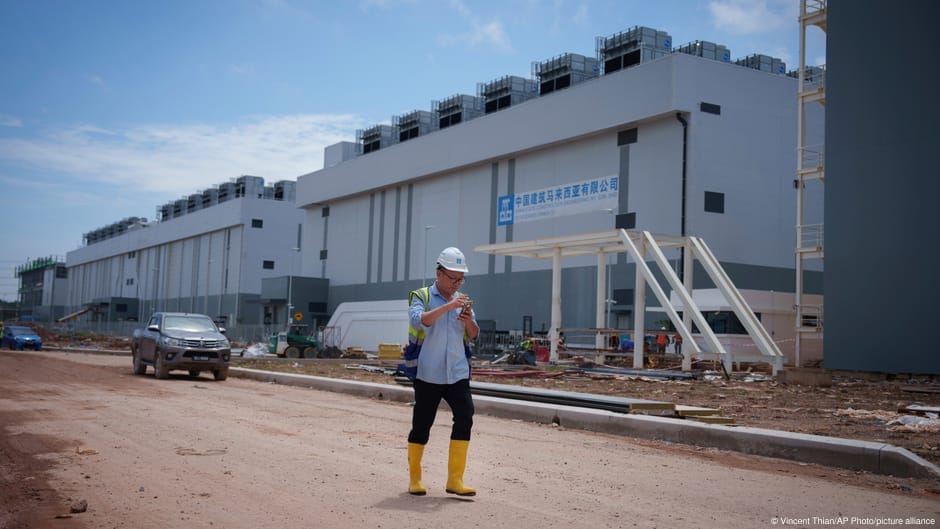
Chinese companies are increasingly using computing capacity outside China to work around US restrictions on advanced artificial-intelligence chips. Malaysia has become a major destination, with €510 billion reportedly invested in AI infrastructure there since February 2025. Fitch Solutions says 125 data centers have been opened in the country, while 16 of Malaysia’s 27 new facilities are located in Johor, near the Strait of Malacca.
Malaysia offers relatively cheap electricity for energy-intensive computing and access to international submarine cables. The government expects the expanding sector to create jobs, with as many as 90% of positions potentially going to local workers. Major US technology companies have also established a presence: Amazon and Oracle have each committed $6 billion, Microsoft and Google $2 billion apiece, and Alphabet announced a further $15 billion investment in early November.
The infrastructure is part of a wider contest over AI leadership. Washington has restricted exports of advanced Nvidia chips to China and sought to limit access to sophisticated chipmaking equipment from Dutch manufacturer ASML. Chinese companies can nevertheless rent cloud capacity or lease overseas data-center space containing US-designed chips, allowing them to train AI models abroad.
The Institute for Progress estimates that remote access to foreign data centers accounted for about 24% of China’s computing power by the end of 2025, with three-quarters of that capacity in Southeast Asia. It projects the share could reach 31% by the end of 2027, although the true scale is difficult to measure because providers and Chinese companies rarely disclose their customers or usage. Alibaba Cloud operates six Malaysian data centers, including three in Johor, while Tencent’s planned five-year, $7 billion Oracle deal for capacity equivalent to 100,000 modern AI chips collapsed after a few weeks amid reported pressure from Beijing and Washington.
Continue in the app — vote & join in ➔