
Polls open in Taiwan as voters choose mayors and county chiefs
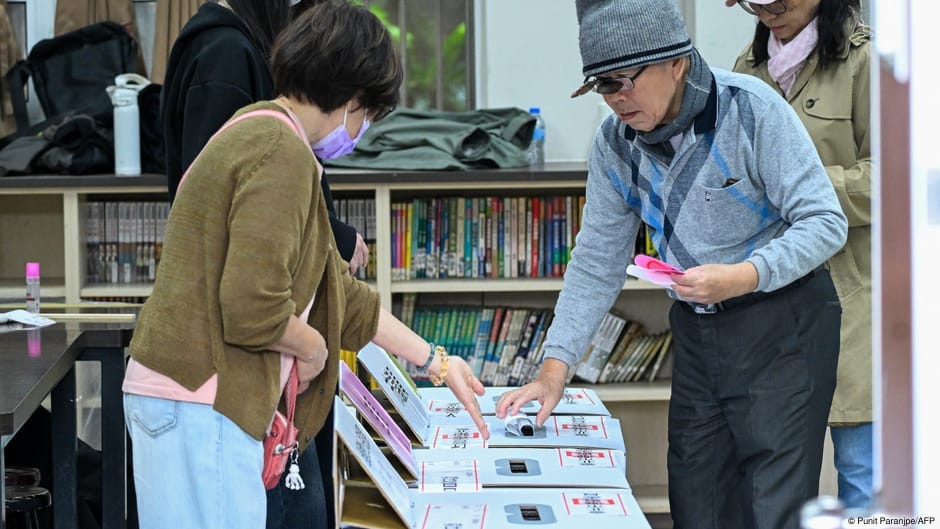
Voting began Saturday in Taiwan’s local elections for mayors and county chiefs in 22 cities and counties, with polls closing at 4 p.m. local time (0800 UTC) and results expected by early evening. Winners serve four-year terms. The contests may hint at the public mood ahead of the 2028 presidential vote, though analysts caution they are not a reliable guide to how people will vote then; Saturday’s outcome could still shape the Kuomintang (KMT) presidential nomination process.
Most candidates are from the ruling Democratic Progressive Party (DPP) or the KMT, also known as the Nationalist Party, which has traditionally done better in local races and favors closer ties with China. In the last local election the KMT won 14 of 22 cities and counties and the DPP five. President Lai Ching-te has campaigned for DPP candidates. Local races have centered on transport, childcare and the environment rather than China, but Beijing has repeatedly weighed in. Taiwan’s government warned voters to watch for fake news on social media, citing a Chinese disinformation campaign. China claims Taiwan as its territory under its “One China” principle and has increased pressure on Taipei to accept that claim, including threats of force.
China denounced DPP Taipei mayoral candidate Puma Shen, whom Chinese police seek over alleged separatist activities. Shen, who entered as an underdog and drew large rallies, said Chinese police had never contacted him and that a Taipei win would be a victory for democracy under pressure from Beijing. If he wins, he would be the capital’s first DPP mayor in nearly 30 years — a result University of Nevada political scientist Austin Wang said Beijing could see as “quite shameful.” Incumbent Taipei Mayor Chiang Wan-an of the KMT has also drawn thousands to rallies and is viewed as a possible future presidential candidate. The DPP is likely to rally behind Lai for reelection. Likely KMT presidential hopefuls include Taichung’s outgoing Mayor Lu Shiow-yen and parliamentary speaker Han Kuo-yu. KMT Chairwoman Cheng Li-wun, whose pro-Beijing stance has alienated many in her party, is also seen as a possible nomination challenger and could face pressure to step down if the KMT fares poorly locally.
Continue in the app — vote & join in ➔