Simulations suggest JWST's "Little Red Dots" are extremely fast-growing black holes
🤖 AI-generated content — The title and summary were produced automatically by artificial intelligence, without human editorial review.
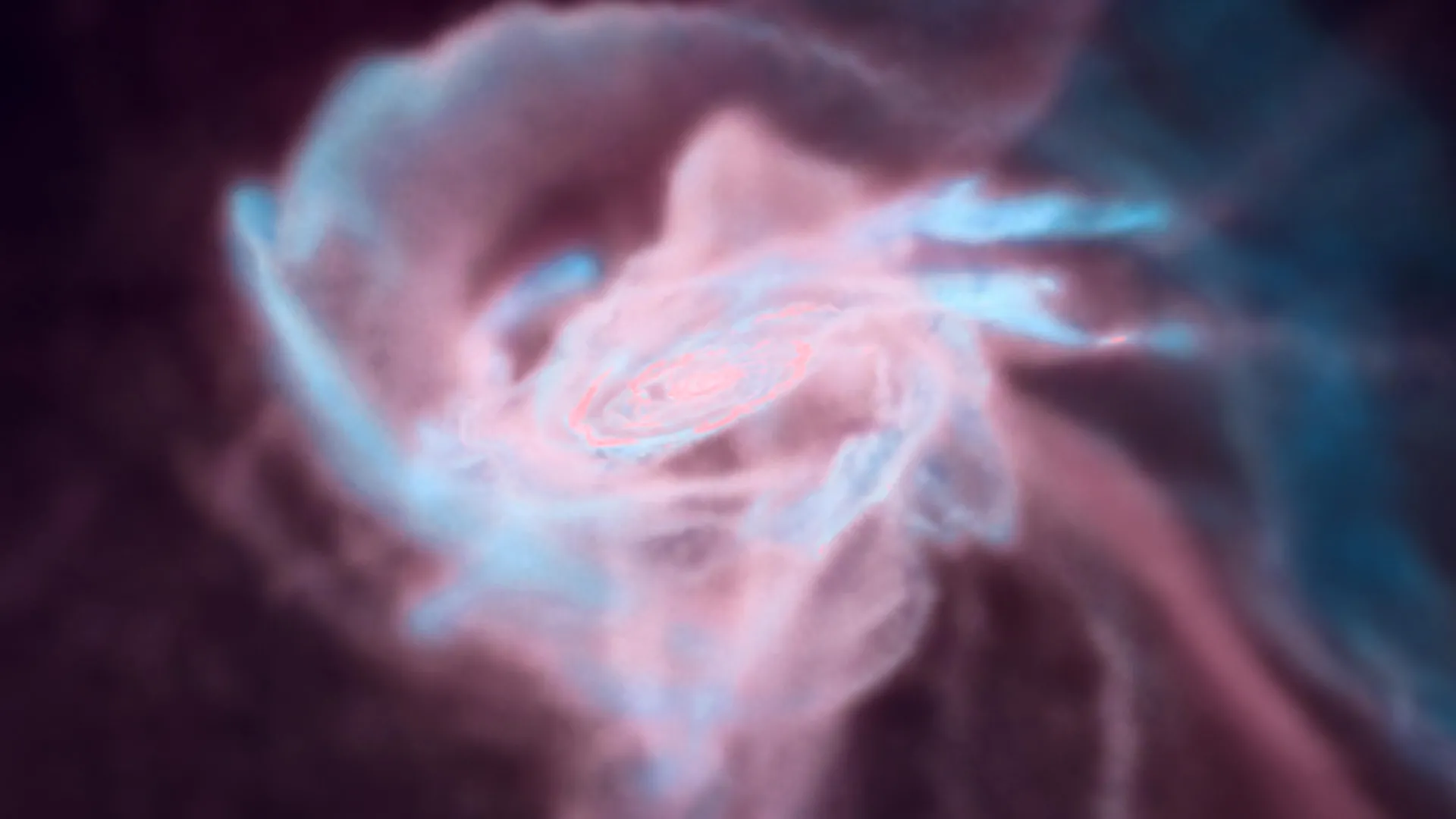
New simulations run on Japan's ATERUI III supercomputer, led by Sunmyon Chon of the Max Planck Institute for Astrophysics, suggest that the James Webb Space Telescope's mysterious "Little Red Dots" are black holes from the early Universe growing dozens of times faster than black holes do today. Intense far-ultraviolet radiation from nearby galaxies suppressed normal star formation in some gas clouds, letting them collapse directly into a single supermassive star that later collapsed into a black hole seed; dense surrounding gas then fueled its rapid growth, closely matching the objects Webb has observed.
Continue in the app — vote & join in ➔Source: ScienceDaily · via ahirlevel.hu