
NASA says the 2026 El Niño may outgrow the record 1997 event
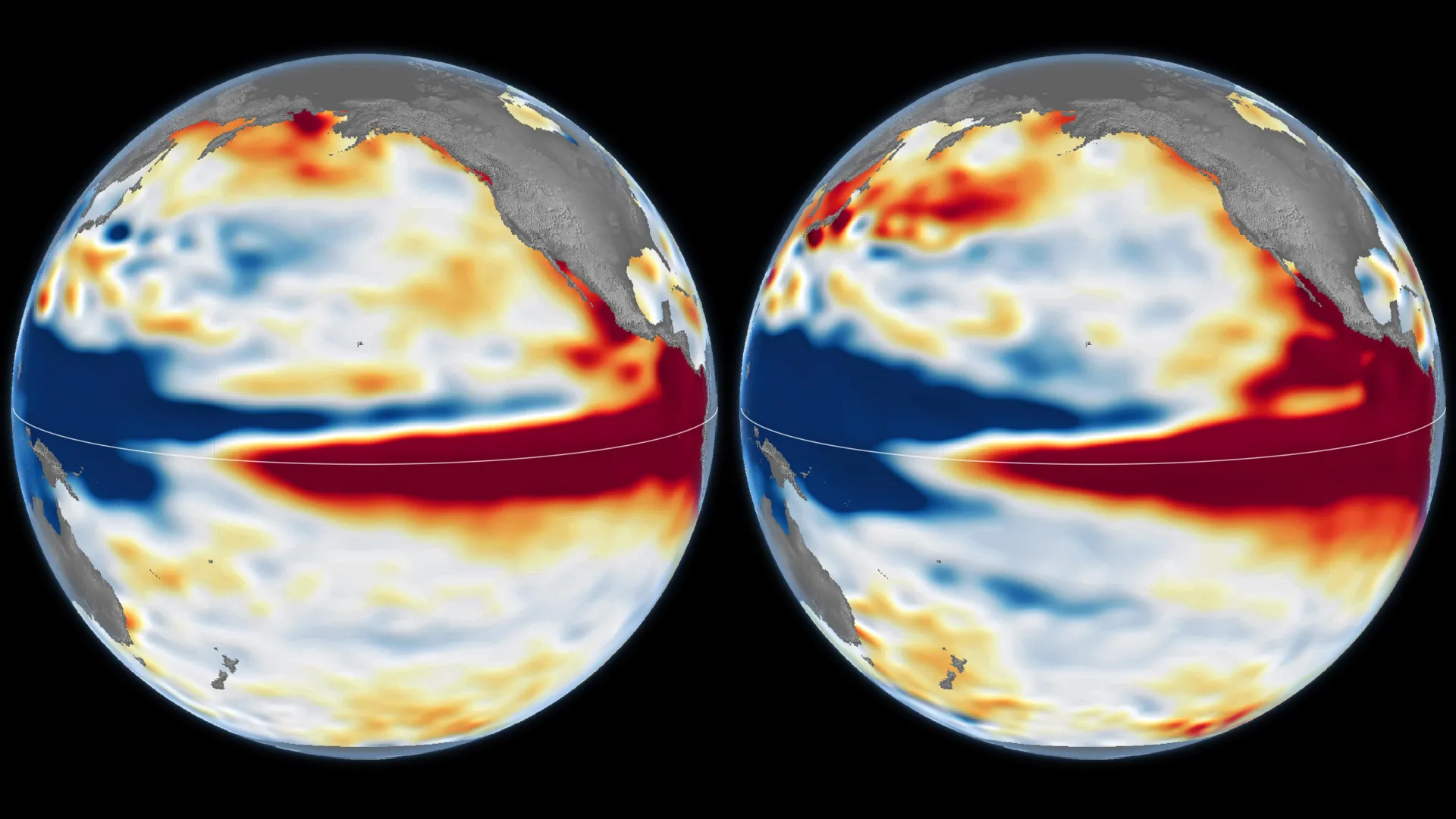
NASA scientists say the 2026 El Niño is intensifying so quickly that it may outgrow the historic 1997–98 event, which drove extreme weather worldwide. Drawing on 35 years of satellite records, they are comparing the current episode with 1997–98 and 2015–16, two of the strongest recent El Niños. Those earlier events were linked to destructive fires in Indonesia and the Amazon, severe drought and crop failures in southern Africa, and heavy rain and coastal flooding in Southern California. El Niño typically returns every two to seven years, when equatorial Pacific waters warm above normal and atmospheric circulation shifts far beyond the Pacific.
Under usual conditions, trade winds pile warm surface water in the western Pacific, raising sea level there. When the winds weaken or reverse, that heat sloshes east, lifting temperatures and sea levels in the central and eastern Pacific. No two events unfold alike, depending on where the warmest water sits and how the atmosphere responds. “The search for the ‘typical’ El Niño is very elusive,” said Josh Willis, project scientist for sea level missions at NASA’s Jet Propulsion Laboratory.
Scientists track the buildup with satellite altimetry: seawater expands as it warms, so unusually high ocean surface height marks stored heat. Comparison maps for 13 October 1997 (TOPEX/Poseidon) and 12 October 2026 (Sentinel-6 Michael Freilich), processed at JPL after removing seasonal cycles and long-term trends, show striking similarities. Willis noted that nearly identical satellites on overlapping ground tracks make a 35-year comparison possible, and that this El Niño is on track to be even bigger—though it has intensified more abruptly than 1997–98. Major rainfall and flooding this winter remain possible; exact impacts are still uncertain.
Continue in the app — vote & join in ➔