
How the 23 Oldest Words in Existence Differentiate Us From Our Primate Cousins
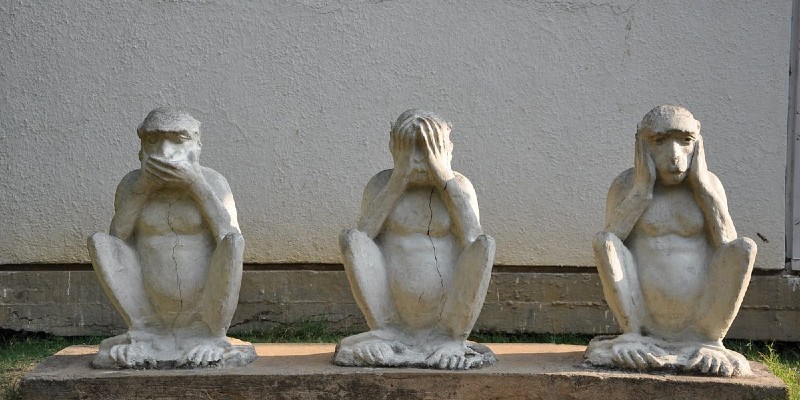
A Literary Hub essay uses a list of twenty-three words thought to be the oldest still in existence to argue that human language—and the self-awareness it carries—is what most clearly sets people apart from chimpanzees and gorillas. “I” and “we” appear on that list, which the writer reads as a sign that ancient humans were at least as interested in self-reflection as in worms, another of the surviving terms. Our closest primate relatives, the piece says, would choose the worms every time.
The gap is not only a matter of vocabulary. Humans, the essay argues, dwell on what they have and want, what they know and do not, where they have been and where they are going—territory other apes never approach, despite long searches for contrary evidence. Language is both blessing and curse because it lets people produce and understand essentially infinite messages, including abstractions: relationships, possibilities, history and beliefs. In the 1930s a couple raised an infant chimpanzee, Gua, alongside their son Donald in the hope that Gua would learn speech; Gua never uttered a word, while eighteen-month-old Donald began copying chimpanzee mannerisms and sounds until the experiment was stopped. Later sign-language work gave apes larger vocabularies but little grammar. After four years, chimpanzee Nim Chimpsky’s most complex sentence was a looping demand for an orange; he also developed clinical depression. Other primates typically acquire a few hundred signs and only short, unstructured messages. Most scientists conclude they are not wired for more: no other animal seems to grasp the concept of a lie, and in decades of teaching dozens of chimps hundreds of signs, none has ever asked a question. Humans do ask questions and examine themselves; complex ideas—about a harvest, a mammoth hunt, a wolf, or an earthquake as punishment from a higher power—need a richer system of signs. Words, the essay says, do not merely take meaning from us; they also give meaning to each human life.
Continue in the app — vote & join in ➔