1.7-billion-year-old fossils tie oxygen to the rise of complex life
🤖 AI-generated content — The title and summary were produced automatically by artificial intelligence, without human editorial review.
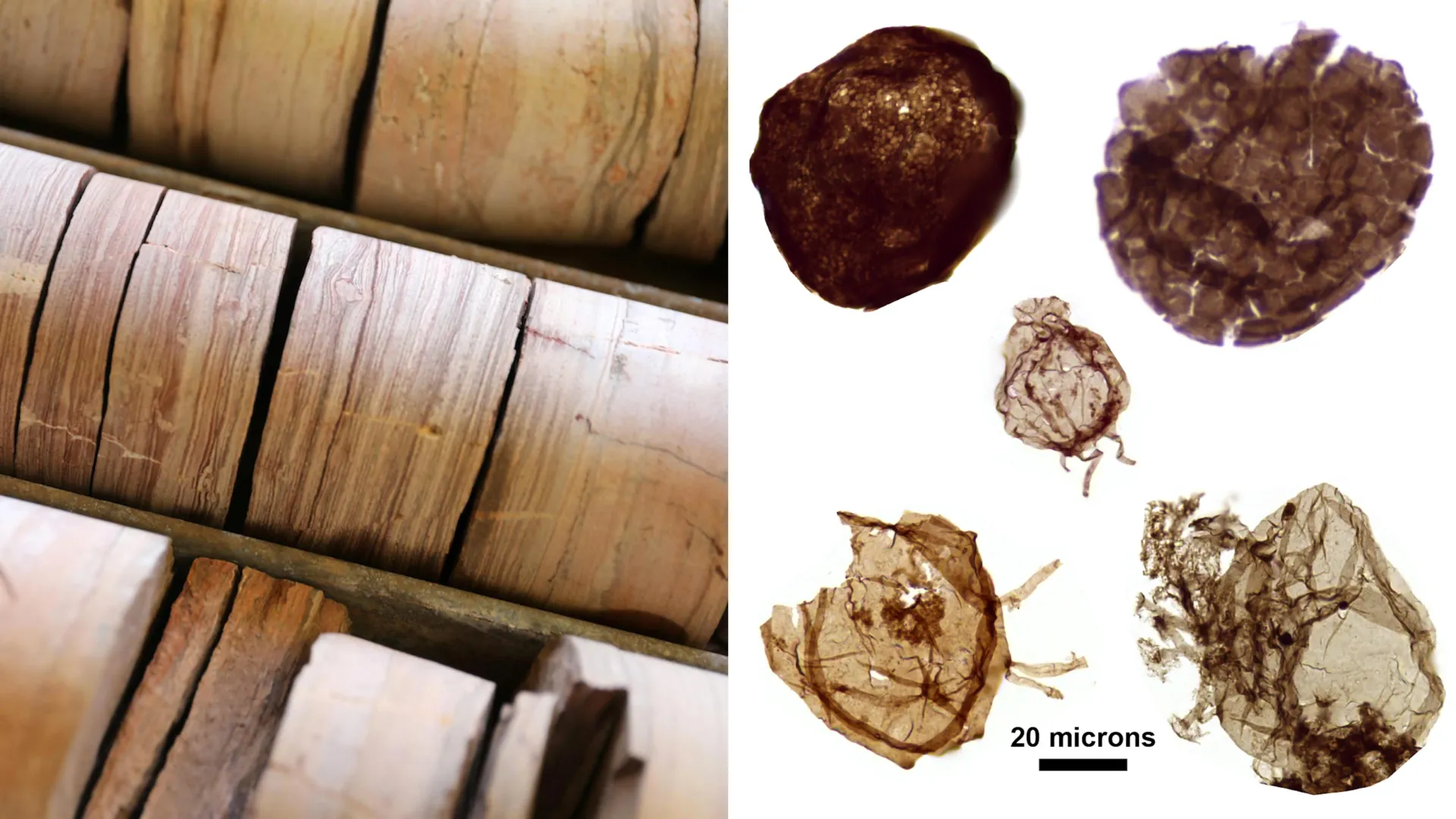
A Nature study of drill cores stored at Darwin’s Northern Territory Geological Survey found more than 12,000 microfossils in 1.7-billion-year-old northern Australian mudstones, among Earth’s oldest known eukaryotes. The cells appeared from coastal mudflats to open sea only where oxygen was available; oxygen-free settings held simpler microbes, strengthening the case that oxygen enabled complex life.
Continue in the app — vote & join in ➔Source: ScienceDaily · via ahirlevel.hu