
NASA Seeks Partners to Build First Nuclear Reactor for Lunar Power
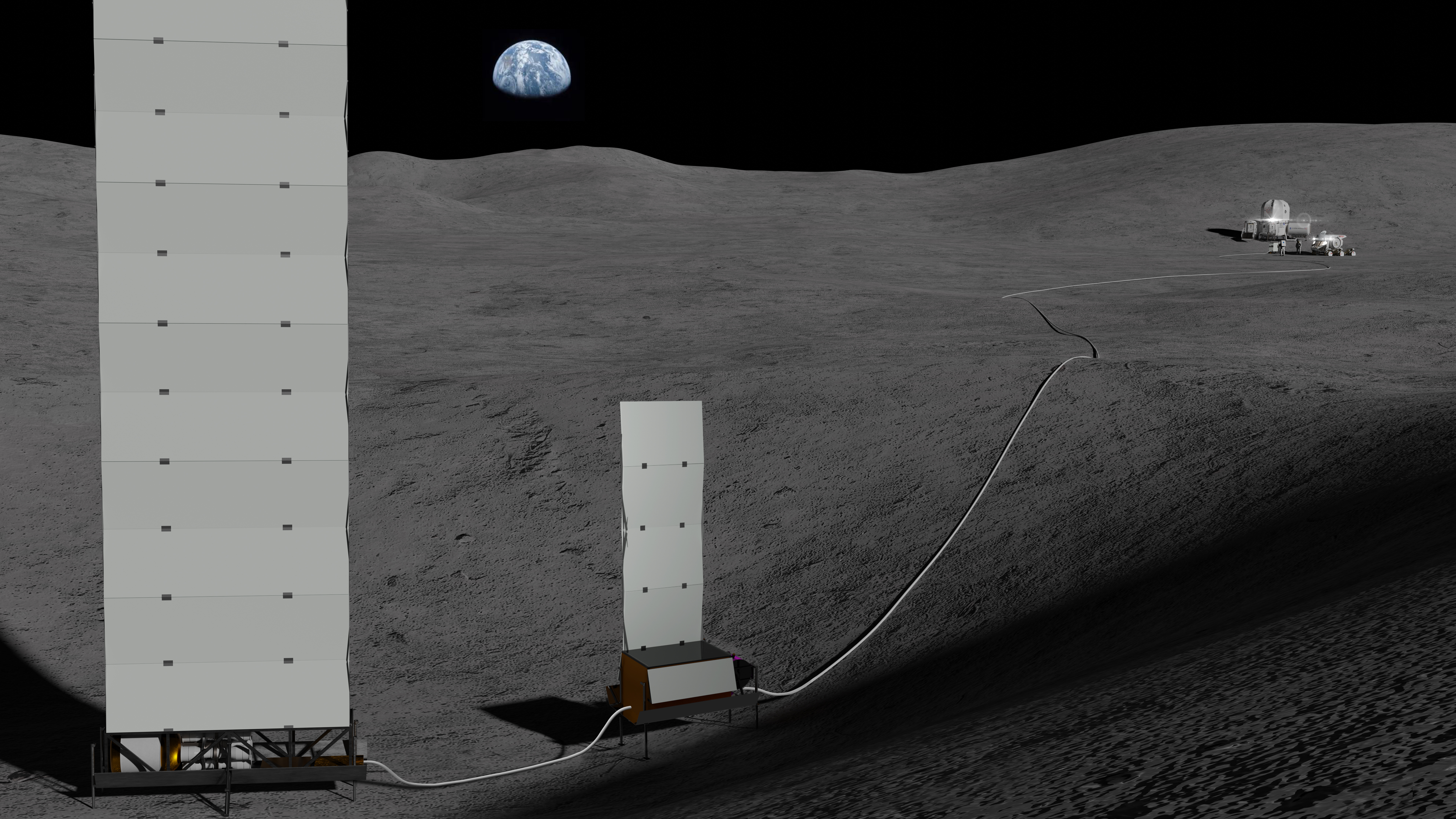
NASA is soliciting industry partners to develop and test Lunar Reactor-1 (LR-1), the first nuclear reactor intended to supply electricity on the Moon as part of plans for a lasting human presence. LR-1 would be a small fission system generating 20 kilowatts—enough for about 16 average U.S. households on Earth—and could power a future Moon Base’s habitats, communications, rovers, scientific instruments and other infrastructure. The agency wants a launch-ready unit by 2030 and at least five years of operation after it is deployed.
Unlike solar arrays, a reactor can run through the Moon’s roughly two-week nights (about 14 Earth days) and in places where sunlight is scarce. Brian Giblin, NASA’s LR-1 program manager, said a reliable, safe and abundant energy source is vital for exploring the lunar and Martian surfaces, and that space nuclear systems can power NASA assets without depending on sunlight. Dust storms on Mars can blot out the Sun for months, and solar power weakens farther from the Sun, so nuclear electricity is expected to matter more as exploration expands.
The Space Power and Reactor Capabilities Request for Proposals builds on a draft issued in August and an industry day in September at the Ohio Aerospace Institute in Cleveland. Reactors must meet Department of Energy safety standards for nuclear operations. The main aim is LR-1 technology, testing and flight design, though NASA may add task orders for other space nuclear systems. Proposals are due by Dec. 21.
LR-1 is run by NASA’s Space Reactors Division with the Department of Energy. The same division is developing Space Reactor-1 (SR-1) Freedom, set to launch in 2028 to deliver three SkyFall helicopters to Mars and demonstrate nuclear electric propulsion, which uses reactor-generated electricity to drive spacecraft. NASA presents LR-1 and SR-1 Freedom together as investments, with DOE, in nuclear power and propulsion for deeper missions.
Continue in the app — vote & join in ➔