
Las Vegas GP brings back pack racing as battery limits shape overtaking on the Strip
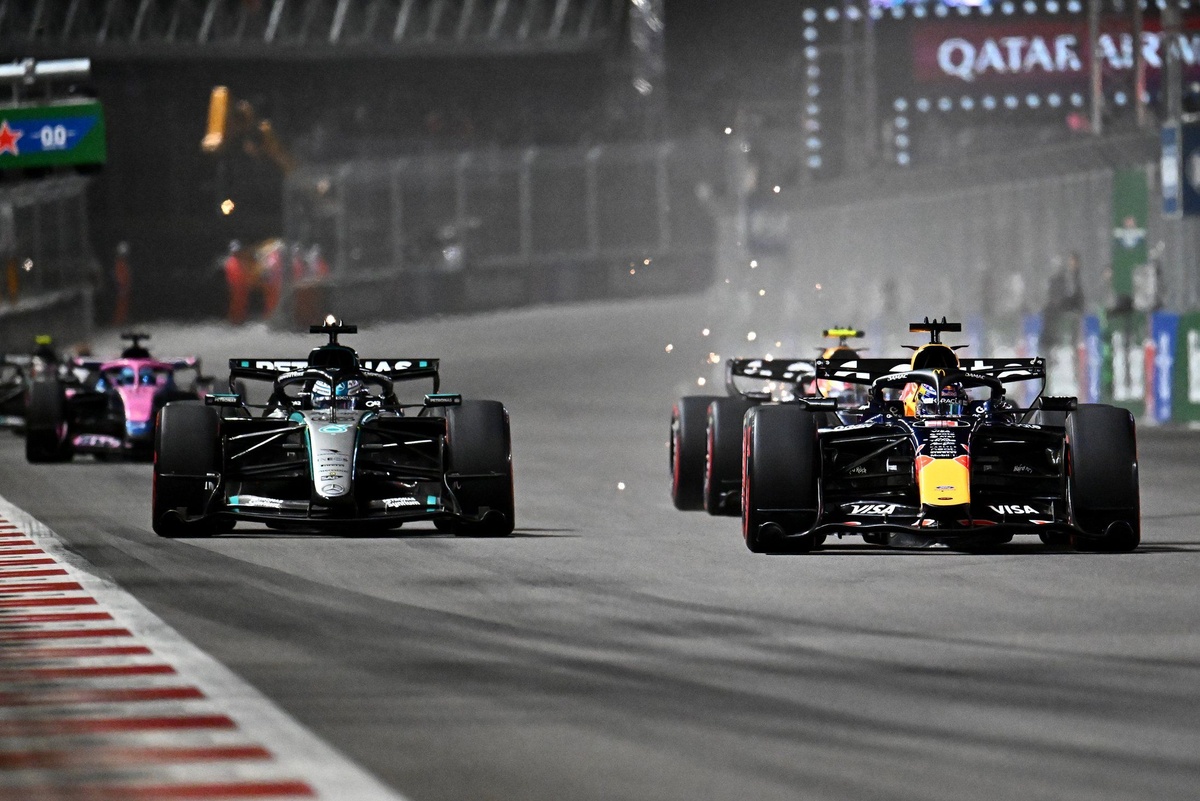
At the Las Vegas Grand Prix, Formula 1 delivered the close pack racing the Strip venue wanted, as limited electric energy on the mile-long straight brought back the yo-yo, battery-managed overtaking seen early in the 2026 season. Lead cars traded places without breaking away, in a spectacle compared to the Indy 500, with frequent position changes and wheel-to-wheel fights for a sold-out crowd — a far livelier watch than the Spanish Grand Prix at the Madring.
Ferrari arrived hoping to win and to protect second in the constructors’ championship by not losing more than 10 points to Red Bull, despite weak engine punch on the long straights. Those aims were undercut by Lewis Hamilton and Charles Leclerc, still unable to race as team-mates after Mexico, where they cost each other the win, and talks in Brazil that were meant to clear the air. Two weeks later it was worse: Hamilton raged at Leclerc for fighting him in the opening slipstream-and-battery phase; Leclerc was there when Hamilton ran off the road and stayed ahead of Lando Norris, drawing a 10-second penalty. After serving it a lap into a safety-car period so as not to delay Leclerc, the pair clashed again and Leclerc hit Hamilton, spinning him and earning a 10-second penalty of his own.
An older rivalry also flared. In FP3, Max Verstappen and George Russell went wheel-to-wheel; Russell later said Verstappen “thinks he is more important than everyone else” and that “someone needs to put him in his place.” Both were fighting for second in the drivers’ championship. They started first and second without incident, then swapped the lead several times until Verstappen always answered Russell’s passes, won the race and closed on that championship second, while Russell finished well outside the podium. Around the Monaco Grand Prix the FIA had judged Red Bull’s 2026 power unit a benchmark, a claim that once looked absurd; Las Vegas, with Verstappen and Isack Hadjar matching Mercedes, suggested the car more than the engine had been the early-season problem, and that the car is now largely sorted.
Continue in the app — vote & join in ➔