
ULA’s Vulcan rocket fails during launch in the alliance’s first total mission loss
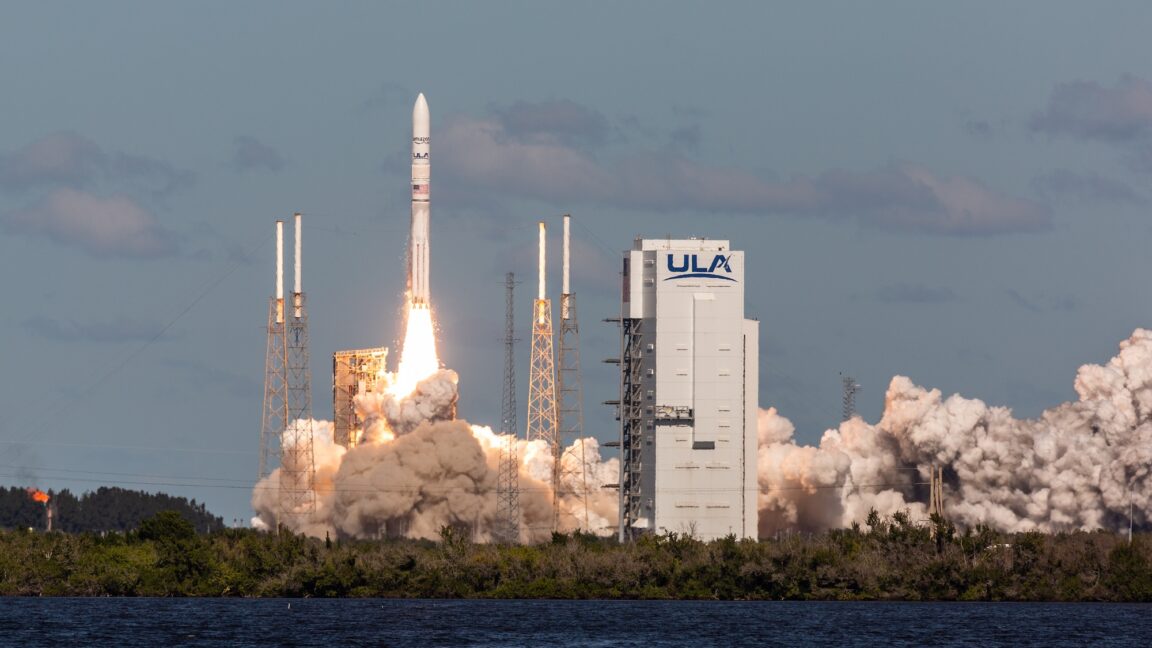
United Launch Alliance’s Vulcan rocket and 40 Amazon Leo broadband satellites fell back to Earth after Sunday’s liftoff from Cape Canaveral Space Force Station, Florida, at 12:40 pm EDT (17:40 UTC). ULA said an anomaly about 10 minutes into the flight kept the Amazon payload from reaching orbit—the first total mission failure since the company was formed in 2006 by merging the rocket divisions of Boeing and Lockheed Martin.
The six solid rocket boosters appeared to work in the first two minutes and were jettisoned on time. Multiple sources told Ars Technica the problem was in the booster stage, not the Centaur V upper stage or those solids. Twin methane-burning BE-4 engines from Blue Origin, Jeff Bezos’s space company, each designed for more than a half-million pounds of thrust, were supposed to shut down just shy of five minutes; they instead burned at least 30 seconds longer, a possible sign of underperformance. Telemetry-driven animation then showed Vulcan spinning after booster shutdown and through Centaur V separation. Launch commentators confirmed the Centaur’s two RL10 engines ignited and vectored thrust in an attempt to recover. ULA ended its broadcast, later saying it lacked immediate data on the cause and would investigate, take corrective action, and return to flight as quickly as possible, with customer visibility into the inquiry.
Vulcan is contracted for roughly half of U.S. military national security launches in coming years, and this flight was the first of 38 Amazon bookings to compete with SpaceX’s Starlink. Two of Vulcan’s four previous flights had solid-booster problems yet still reached orbit after lengthy reviews. The failure is expected to ground the rocket indefinitely and is a blow to Amazon and the U.S. Space Force, with possible knock-on effects for NASA’s Artemis lunar program.
Continue in the app — vote & join in ➔