
AI can combine mathematical ideas beyond human scale, but could it produce an Einstein-level breakthrough?
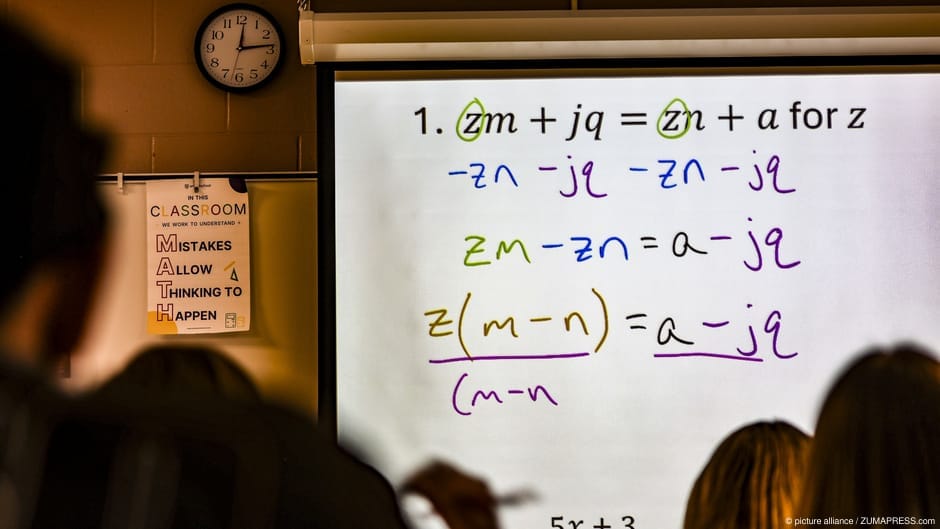
Chatbots once bungled basic arithmetic: DW’s writer asked ChatGPT last year to add British state pension contributions and found the total wrong by a few pounds, a pattern a mathematician friend said was common. In November 2026, Anthropic mathematician Levent Alpöge claimed to have solved the Riemann hypothesis — on the distribution of primes, open since 1859 — with help from the company’s chatbot, Claude.
Andrea Asperti of the University of Bologna said early models were trained to predict language, not to calculate, and could run millions of operations and still be wrong, much as humans err in mental arithmetic despite billions of neurons. Ken Ono of the University of Virginia recalled Google’s Gemini once treating 9.11 as larger than 9.8, but said such mistakes are rare today. Asperti credited gradual gains in model size, training data and methods, not a single breakthrough: systems can now try approaches, check work, correct errors and use specialised tools, producing qualitative leaps. Solving open problems, he said, requires real creativity, not retrieval of known arguments.
Kevin Buzzard of Imperial College London was excited but unsurprised, having already seen AI settle an algebraic-geometry question with a counterexample. Ono compared the leap to chess: where humans see a few moves, AI can search vast trees. In pure mathematics it can treat tens of thousands of papers as “moves,” and the proposed Riemann proof might have needed 30 or 40 specialists in a room. The individual ideas, he suggested, may still lie within human reach; the novelty is assembling them across fields in a way people rarely can.
Continue in the app — vote & join in ➔