
Willison traces three LLM inflection points as Claude Opus 4.5 turns one
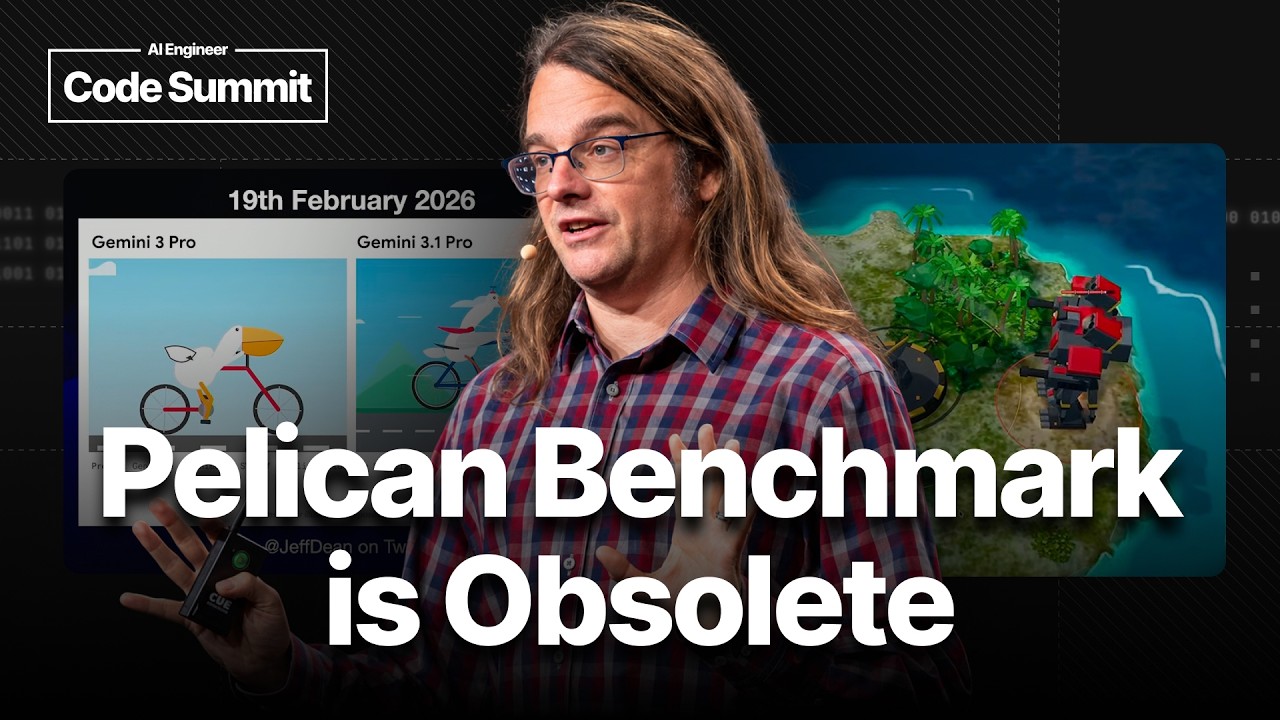
Simon Willison’s keynote at the AI Engineer Code Summit argued that large language models and coding agents passed three major capability inflection points in a year. Writing on 24 November 2026, the first anniversary of Claude Opus 4.5, he treats that Anthropic release as the first of them. Testers said Opus 4.5 handled ambiguity and trade-offs without hand-holding, diagnosed complex multi-system bugs, and reached tasks that had been near-impossible for Sonnet 4.5 weeks earlier. Claude Code was then nine months old, having shipped with Claude 3.7 Sonnet on 24 February 2025. For Willison it was the first model whose default Claude Code output was usually correct, so daily use finally felt faster than doing the work himself after earlier runs needed frequent correction.
The same November, OpenAI shipped GPT-5.1 Instant, GPT-5.1 Thinking, GPT-5.1-Codex and GPT-5.1-Codex-Max, with a similar lift for Codex. Holiday tinkering in December left people ready to use the tools on real work by January. A second shift arrived in April with Claude Mythos, which Anthropic withheld as too dangerous because it could find and exploit security holes. June’s Claude Fable 5 was a defanged Mythos that solved most problems but blocked security work; after three days U.S. export controls removed it until 1 July. Willison now groups Claude Fable 5, 5.1 and 5.2, Claude Opus 5.5 (his “cheap Fable”), GPT-6 Astra and possibly Gemini 4 Neon as Fable-class: give them a goal and tools and they act proactively—for example spinning up a pyobjc-framework-Quartz screenshot path and a CORS localhost logger to fix a Safari display glitch, or triangulating a mystery beep to about 40cm with five WebAudio microphones (Opus 5.5 then Fable 5.2). Over the past four months those models also became strong at 3D work in Blender and Three.js—noticed first with Fable 5, then Opus 5.5, GPT-5.6 Sol, GPT-6 Astra and the Gemini 4 family, including Gemini 4 Neon’s OpenStreetMap mech animation across Manhattan, Queens and Brooklyn—raising the question of whether spatial skill is a robotics-training side-effect.
Continue in the app — vote & join in ➔